
 Brooks Morgan, RN, MBA
 Juan Munoz Pena, MD
 Stephen Lemon, PharmD
Overview
- Problem: High rate of inpatient blood glucose <50 mg/dL post-insulin; goal was a 20% reduction to improve patient safety
- Key Interventions:
- Triad approach — synchronized food delivery, glucose measurement, and insulin timing
- 20% basal insulin reduction on admission to offset aggressive home regimens
- Weight-based dosing — 0.25 units/kg for T2DM; 0.15 units/kg for T1DM or CKD
- Run charts + monthly case reviews for real-time monitoring and protocol adherence
- Results: Hypoglycemia rate successfully reduced; weight-based dosing proved more effective than the basal reduction alone
- Key Lesson: Multidisciplinary collaboration, PDSA methodology, and data visualization were essential to sustained success
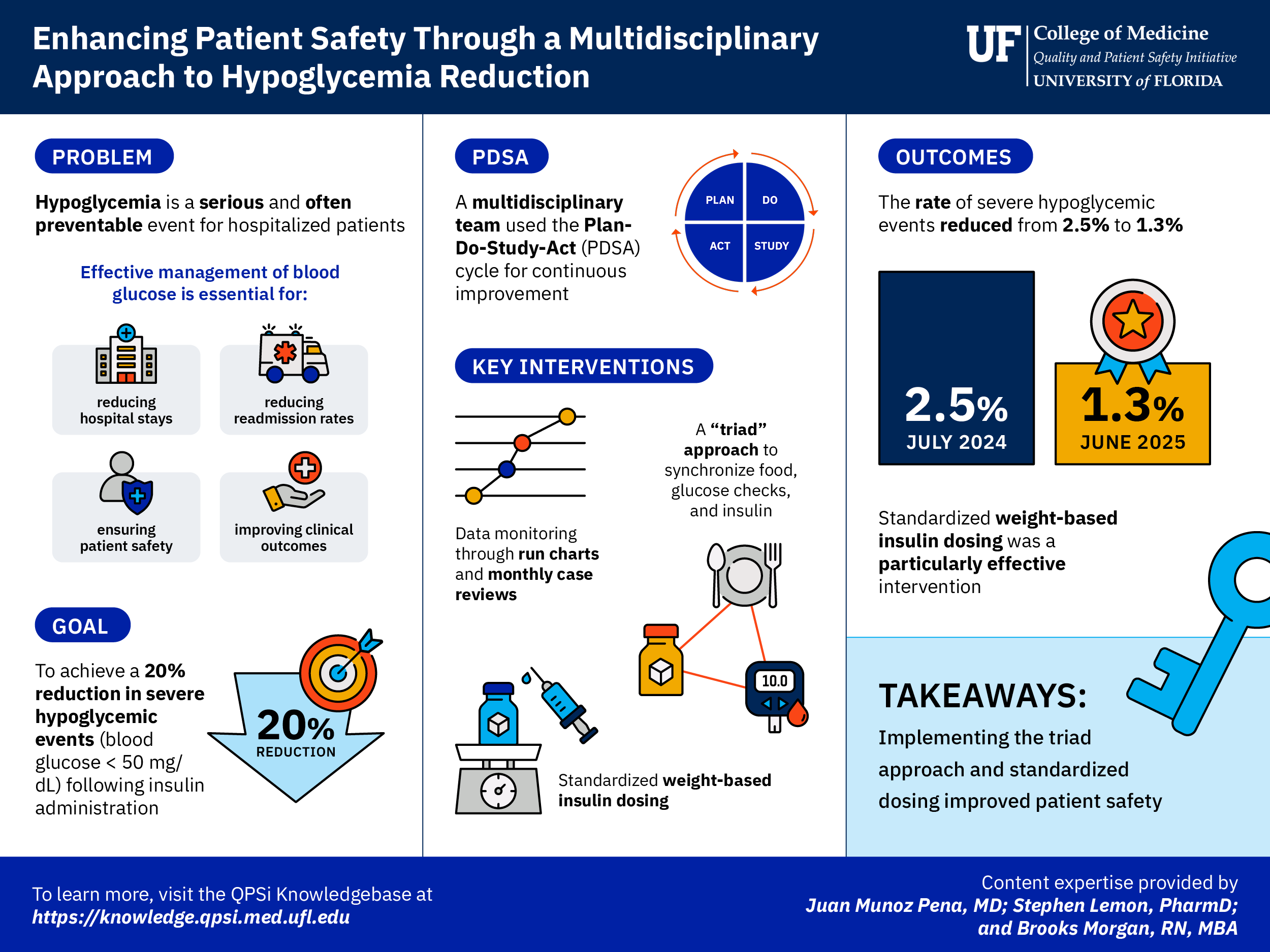
Image: Hypoglycemia Reduction Visual Summary
Case Summary
When hospitalized patients experience dangerously low blood glucose, the consequences can be severe — and preventable. This case study follows a multidisciplinary team that used PDSA cycles and targeted interventions to cut severe hypoglycemic events nearly in half, improving patient safety. Their approach is a replicable model for any team tackling medication management challenges.
Setting & Context
This quality improvement initiative took place in an inpatient hospital setting, targeting hospitalized adult patients receiving insulin therapy. The project was led by a multidisciplinary team that included endocrinologists, nurses, dietitians, diabetes educators, and quality improvement specialists — all working in coordination to address a systemic gap in blood glucose management.
Problem & Aims
Hypoglycemia — blood glucose below 50 mg/dL — is a serious and often preventable complication for hospitalized patients. Left unaddressed, it can lead to seizures, falls, extended hospital stays, readmissions, and even death. Beyond the direct clinical impact, hypoglycemia is a key quality and safety metric tracked by national organizations, directly influencing hospital ratings and reimbursements.
Poor institutional performance on this metric identified a clear opportunity for improvement. The team set a primary aim of achieving a 20% reduction in the rate of hospitalized adult patients experiencing a blood glucose level below 50 mg/dL following insulin administration.
QI Strategy & Changes
The team employed the Plan-Do-Study-Act (PDSA) cycle to guide continuous, iterative improvement. Baseline data was collected and monthly case review meetings were held to identify root causes of hypoglycemic events and test targeted interventions.
Four key process changes were implemented:
- Triad Implementation: A coordinated approach synchronizing the timing of food arrival, glucose measurement, and insulin administration to ensure insulin is given when it is most effective and least likely to cause hypoglycemia.
- Basal Insulin Adjustment: A protocol change reducing patients’ home basal insulin dosages by 20% upon admission to mitigate risks from overly aggressive home regimens — particularly relevant as many patients use basal insulin doses that do not align with a hospital’s carb-consistent diet.
- Standardized Weight-Based Insulin Dosing: Weight-based dosing protocols were introduced for specific patient populations — 0.25 units/kg for type 2 diabetes patients and 0.15 units/kg for those with type 1 diabetes or chronic kidney disease — with additional care sets developed for insulin-naive patients.
- Data Monitoring and Visualization: A run chart was developed to visually track intervention timing against hypoglycemia rates, supported by regular audits and monthly case reviews to monitor protocol adherence and drive refinement.
Impacts & Outcomes
The PDSA-guided interventions produced a significant and measurable improvement in patient safety. The rate of severe hypoglycemic events fell from 2.5% in July 2024 to 1.3% by June 2025 — exceeding the team’s original 20% reduction goal.
Standardized weight-based insulin dosing emerged as the most impactful individual intervention, proving more effective than the initial basal insulin reduction protocol. The outcomes also reflected a commitment to excellence in inpatient care.
Practical Insight
The challenge: Reducing preventable severe hypoglycemia in hospitalized patients receiving insulin, while standardizing care across a diverse patient population.
What worked — and what others can adapt:
- Build a diverse team first. Bringing together endocrinologists, nurses, dietitians, and diabetes educators ensured interventions were clinically sound and practically executable across care settings.
- Let data lead. Run charts and monthly case reviews turned abstract metrics into actionable insights, enabling timely adjustments and clear accountability.
- Synchronize care processes. The triad approach — aligning food, glucose checks, and insulin timing — is a low-cost, high-impact process change applicable in most inpatient settings.
- Standardize dosing with population-specific protocols. Weight-based insulin dosing outperformed blanket dose reductions, underscoring the value of tailored rather than uniform approaches.
- Use PDSA iteratively. The willingness to test, measure, and pivot (as the team did when shifting from basal reduction to weight-based dosing) was central to the project’s success.
This framework can be applied to other medication management challenges or quality measures wherever multidisciplinary collaboration and real-time data monitoring are feasible.
Resources
The following assets support deeper exploration of this case study and provide practical tools for implementing similar quality improvement strategies in your own practice.
Hypoglycemia Case Study
In this video, the project team walks through the full arc of the initiative — from the clinical and quality rationale for targeting hypoglycemia, to the PDSA-driven interventions, to the outcomes achieved. It offers a clear, firsthand account of how the triad process and standardized weight-based dosing were implemented and why they worked.
Transcript: Hypoglycemia Quality Improvement Project
The hypoglycemia quality improvement project aimed to reduce hypoglycemic events among inpatients and enhance patient safety and care quality. Reducing hypoglycemia is essential to ensure patient safety, as hypoglycemia can lead to serious complications such as seizures, falls, and even death. Reducing hypoglycemia improves clinical outcomes by reducing hospital stays, complications, and readmission rates, while also enhancing the patient experience and trust in care.
Additionally, hypoglycemia is a key quality and safety metric tracked by regulatory bodies, impacting hospital ratings and reimbursement. Preventing it aligns with both ethical responsibilities and standards for high-quality care.
Reflecting a commitment to high standards of patient care, the primary aim was to achieve a 20% reduction in the number of hospitalized adult patients with blood glucose levels below 50 milligrams per deciliter after receiving insulin that day or the day prior. This goal was achieved in two years.
The project employed the Plan-Do-Study-Act, PDSA cycles. These cycles facilitated continuous improvement through repeated testing and refinement of interventions. Monthly meetings were conducted to review individual cases of hypoglycemia, identify root causes, and discuss potential improvements.
Several key changes were implemented, including the triad process, which synchronizes food delivery, glucose monitoring, and insulin administration. Reducing basal insulin dose by 20% was the initial attempt, but weight-based insulin dosing as an alternative was more effective in reducing hypoglycemia events.
Clinicians also developed standardized care sets for patients with type 1 and type 2 diabetes, chronic kidney disease, and those who are insulin naive. Clinicians also conducted regular audits and monthly case reviews to identify areas of opportunity and assess both hypoglycemia incidence and adherence to new protocols.
Data monitoring and visualization were integral to the project. A run chart was used to track the timing of interventions and corresponding changes in hypoglycemia rates, allowing clinicians to evaluate their effectiveness over time.
All told, the project successfully achieved a measurable reduction in hypoglycemic events, significantly improving our Vizient score and demonstrating enhanced patient safety and quality care. This project underscores the importance of strategic planning, continuous monitoring, and multidisciplinary collaboration in improving patient care.
Visual Summary: Hypoglycemia Reduction
A downloadable, one-page visual overview of the problem, goal, key interventions, outcomes, and takeaways. Use as a quick reference when planning a similar initiative.