
 Kathryn Hitchcock, MD, PhD
Creating a Culture of Safety and Support
In the high-stakes world of medicine, tragedies can occur. When a patient is harmed, the impact ripples outward, affecting everyone involved, from the surgeon to the nurses. The key to creating a safe environment is to recognize that health care providers are also victims of system failures, and to provide them with the support they need.
This page will introduce the core principles of a just culture, emphasizing the importance of avoiding blame, focusing on system-level solutions, and caring for all those affected by adverse events. By shifting the focus from individual errors to systemic issues, you can create a culture of learning, support, and continuous improvement, leading to better outcomes for both patients and providers.
Resources
The resources below explain the core principles of a just culture and why it’s essential for creating a safe and supportive environment in healthcare.
Just Culture
In this brief video, Dr. Kathryn Hitchcock explains why avoiding blame and focusing on system failures is crucial for improving patient care. She also explores how to support all those affected by adverse outcomes and create a culture of learning and continuous improvement. This video is excerpted from the free CME course, Fundamentals of Patient Safety.
Transcript: Just Culture
Sometimes tragedies happen in medicine. When a patient is harmed, the people around the patient are harmed too. For example, a surgeon whose patient dies on the table may go through terrible grieving afterward, even if there was no chance of a better outcome. Nurses who are unable to resuscitate a patient can go through a long period of mourning that profoundly affects them.
One of the most important things you can do to make your hospital or clinic a safe place for patients is to take care of all the victims of an incident. Good systems have individuals trained to help team members involved in severe adverse patient outcomes.
Circling back, that important work can’t happen when team members feel just one mistake from being blamed. When we blame people and not systems, that can lead to more suffering for patients and health care providers stuck within a system that sets them up for failure.
These are the fundamental concepts of just culture.
First, avoid blaming and shaming team members. Instead, put the blame for problems where it belongs, on the system.
Second, ensure all those impacted by a system’s failures get the help they need.
Remember, very, very few people come to work thinking, I would like to harm a patient today, so why treat your team members like they did.
Every system is perfectly designed to get the results that it gets. If you don’t like the system’s outcomes, fix the system.
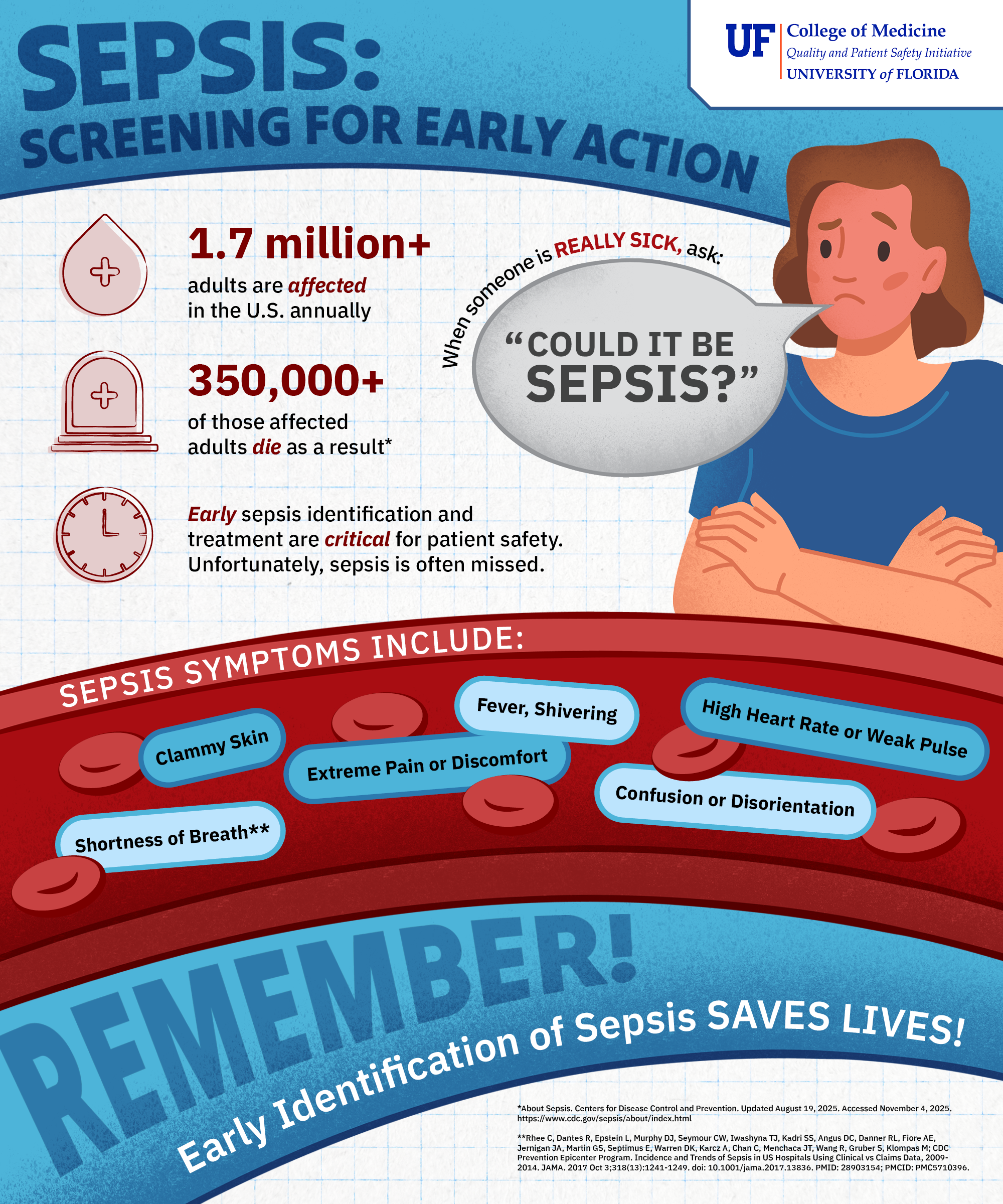
Sepsis Infographic
Early sepsis identification and treatment are critical for patient safety, as over 1.7 million adults are affected in the U.S. annually, and more than 350,000 die as a result. Unfortunately, sepsis is often missed. It serves as a critical reminder that when someone is really sick, providers should always ask: “Could it be sepsis?”
Download the Sepsis Infographic
Key symptoms of sepsis to watch for include:
- Clammy skin;
- Extreme pain or discomfort;
- Fever or shivering;
- Confusion or disorientation;
- Shortness of breath; and
- A high heart rate or weak pulse.