 Peter Dziegielewski, MD, FRCSC, FACS
Overview
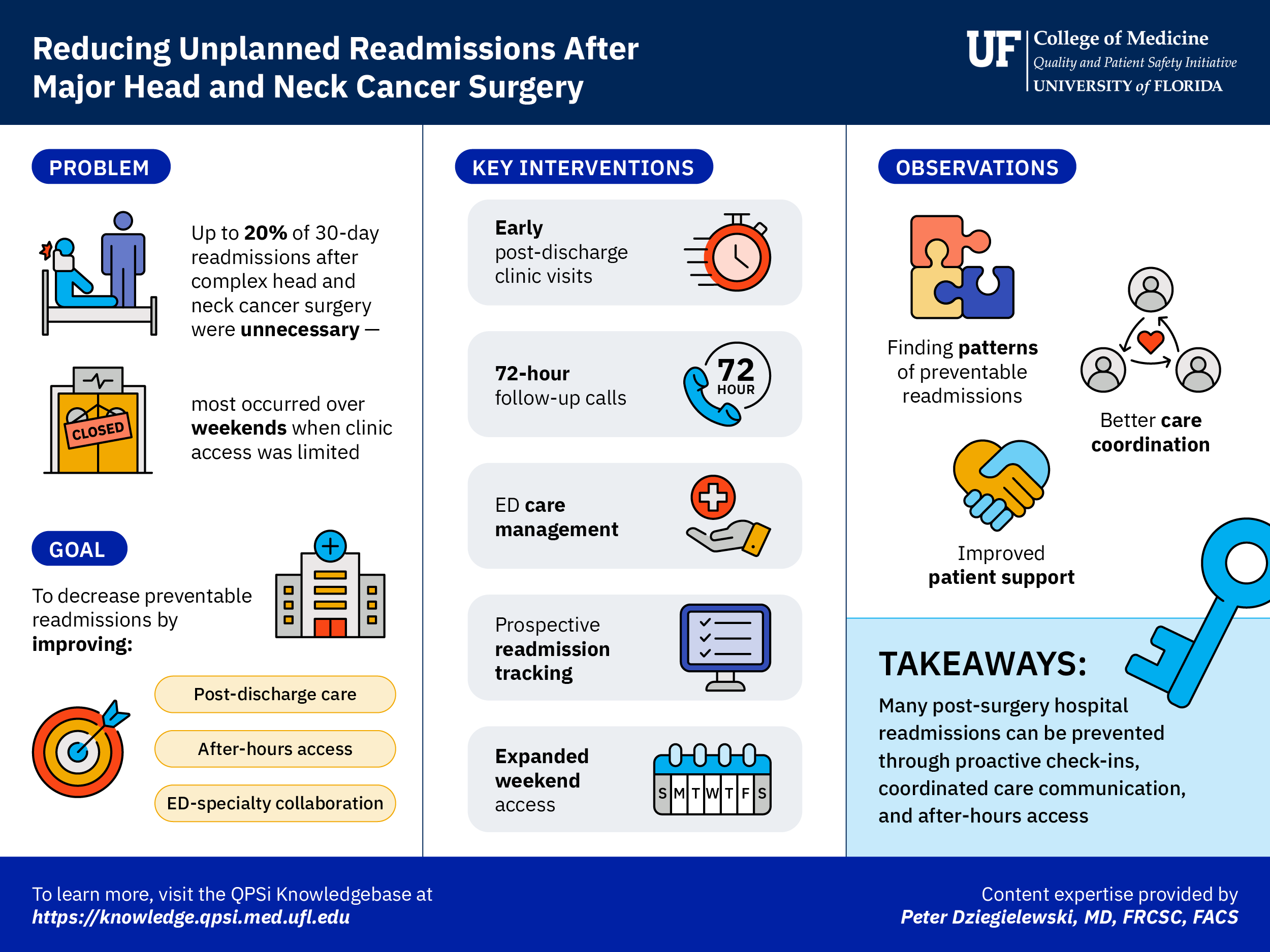
- Problem: Up to 20% of 30-day readmissions after complex head and neck cancer surgery were unnecessary, with most occurring during weekends when clinic access was limited.
- Key Interventions: Early post-discharge clinic visits, 72-hour follow-up calls, emergency department care coordination, prospective readmission tracking, and expanded weekend access.
- Results: Identification of preventable readmission patterns, improved care coordination, and enhanced patient support systems that reduce unnecessary hospital returns.
- Key Lesson: Many post-surgical readmissions can be prevented through proactive outreach, coordinated communication between emergency and outpatient services, and addressing access barriers during non-business hours.
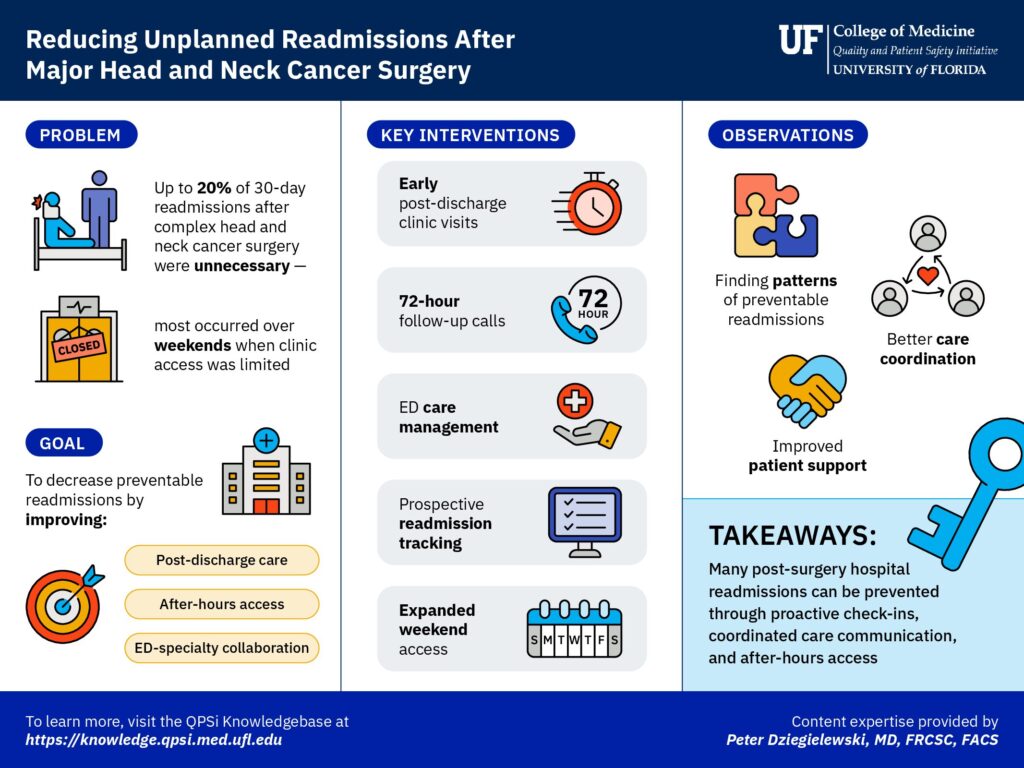
Image: 30-Day Unplanned Readmissions Visual Summary
Case Summary
Head and neck cancer patients undergoing major reconstructive surgery face complex recoveries that often lead to unplanned hospital readmissions. A 2016 study at UF Health revealed that 20% of these readmissions were unnecessary—patients who could have been managed in the clinic instead returned to the emergency department, typically during weekends when outpatient services were unavailable. This case study explores how a surgical oncology team redesigned their post-discharge care pathway to reduce preventable readmissions while improving coordination and patient support.
Setting & Context
This work took place at UF Health in Gainesville, Florida, within the Head and Neck Surgical Oncology and Microvascular Reconstructive Surgery division. The team, led by Dr. Peter Dziegielewski, treats patients who undergo extensive surgeries lasting 8-16 hours, involving cancer removal and complex reconstruction using tissue from other body parts. These patients—often older, with significant medical comorbidities and long smoking histories—typically stay hospitalized for 1-2 weeks and face complication rates of 20-50%. As a destination care facility, UF Health serves patients traveling up to 5 hours for treatment, adding distance as a barrier to timely outpatient follow-up.
Problem & Aim
Patients were frequently readmitted within 30 days, most (≈ 75 %) during off‑hours (5:00 p.m. Friday to 8:00 a.m. Monday). Many admissions were for non‑emergent wound, infection, or social issues that could have been handled outpatient. The goal was to cut preventable readmissions by strengthening post‑discharge support, expanding out‑of‑hours access, and improving coordination between the ED and specialty services.
QI Strategy (Key Interventions)
- Early outpatient follow‑up – every high‑risk patient was scheduled for a clinic visit within 7 days to assess wounds, tracheostomy, feeding tubes, and social needs.
- 72‑hour post‑discharge call – the inpatient APP who cared for the patient called using a checklist to reinforce red‑flag education and triage concerns.
- ED‑Specialty liaison – a dedicated phone line let the ED contact the ENT team upfront, enabling pre‑visit labs/imaging and same‑day or next‑day clinic appointments instead of admission.
- Prospective tracking – an EMR smart phrase captured surgery date, discharge, readmission reason, and location in real time, allowing rapid pattern detection.
- Weekend coverage – on‑call physicians arranged weekend or early‑Monday clinic slots, reducing default ED use.
- Early social‑work involvement – case managers assessed home support and rehabilitation needs before discharge.
- Local provider network & telehealth – partnerships with community otolaryngologists and virtual wound checks gave remote patients timely specialty access.
Impacts & Outcomes
- 20% of readmissions identified as preventable with outpatient care.
- Clear pattern: 75% occur after business hours.
- Standardized 72‑hour call and week‑one visit catch emerging issues early.
- ED‑to‑clinic triage reduces unnecessary admissions.
- Real‑time tracking enables continuous QI cycles.
Quantitative results are still being collected, but the new workflow is positioned to lower readmissions sustainably while improving patient experience.
Practical Takeaways
- Schedule early post‑discharge visits for high‑risk patients.
- Assign a familiar provider to make a structured follow‑up call within 72 hours.
- Create a direct ED‑specialty line and pre‑visit ordering protocols.
- Use simple EMR tools (smart phrases) for prospective readmission tracking and monthly review.
- Expand weekend coverage or offer tele‑visits to bridge the after‑hours gap.
- Engage social work early and share clear emergency criteria with rehab facilities.
- Build local referral networks or telehealth options for patients living far from the tertiary center.
Resources
The following resources support the implementation of strategies to reduce unplanned readmissions after major head and neck cancer surgery.
Case Study: Avoiding Head and Neck Readmissions in Surgical Oncology
In this video, Dr. Peter Dziegielewski, Chief of Head, Neck Surgical Oncology and Microvascular Reconstructive Surgery at UF Health, discusses the challenges of readmissions in this complex patient population. He reviews findings from a 2016 UF Health study, explains why readmissions cluster during weekends, and describes multiple interventions the team has implemented—including early clinic visits, 72-hour follow-up calls, and emergency department coordination. This video provides both the clinical context and practical strategies that other surgical programs can adapt.
Transcript: Avoiding Head and Neck Readmissions in Surgical Oncology
I’m Doctor Peter Dziegielewski or some people abbreviate it to Doctor Dz. I’m the chief of Head and Neck Surgical Oncology and Microvascular Reconstructive surgery at UF Health in Gainesville, Florida. Today we’ll be discussing 30 day unplanned readmissions in head and neck cancer surgery.
So as many of you know, there are several quality metrics that all hospitals now have to keep track of. One of the most important of these is 30 day unplanned readmissions after surgery, and that includes patients who are readmitted to the hospital for any reason after they are discharged within 30 days of their discharge date.
So focusing on head and neck cancer surgery, we have to understand what types of operations we’re talking about. These are often very complex surgeries that can take anywhere from 8 to 16 hours to accomplish. They involve removing a cancer from the patient’s head and neck area. Usually these areas will be the mouth, the throat, the neck, jaw bone, the face and then using other parts of their body to reconstruct these missing structures, such as taking a bone from the leg or taking some flesh from the thigh or the forearm.
As you can imagine, after such a long operation, these patients have a complex hospital stay, and they’re usually in the hospital anywhere from one to two weeks. Following that, they have quite a long journey of recovery that can involve going home or potentially to a rehabilitation facility. During that time, there are a lot of tasks that need to be coordinated and a lot of healing that needs to happen. And therefore we often see these patients very quickly after their discharge, and sometimes they end up in our hospital in an unplanned fashion.
This patient population tends to consist of older patients, patients with a lot of medical comorbidities, patients who have smoked for a really long time or been exposed to other factors that make wound healing challenging, and therefore they’re more prone to complications such as infections, poor wound healing. Many of them also have poor medical literacy and not enough social support after surgery. And these are all factors that make readmissions more likely in this patient population.
Due to the complex nature of this patient population, they tend to have complications more frequently than other less complex surgeries, and this can include infections, poor wound healing, and medical complications. The rate of these can occur anywhere from 20 to 50%, depending on the patient and the type of surgery they undergo.
So a study at UF Health in 2016 found that the most common reasons for readmissions in these patients include bleeding, infections or fistulae, poor wound healing, and even social considerations. Twenty percent of these readmissions were even found to be unnecessary. Some of the unnecessary readmissions occurred when the patient came to the emergency department and were readmitted under a non ENT service as a courtesy to the EMT service. In many of these cases, these patients could have been managed in the clinic, had they come to the clinic in the first place.
Some of these reasons for readmission include infections that are not actually infections, or ones that we would consider quite minor that we can manage in the clinic. Some of them are for poor wound healing, which often just require outpatient wound healing, consultations, and dressing management. And some of them even include some social management with family that may need additional help to take care of the patient at home. Many of these situations can be managed by our staff in the clinic.
In some other cases, patients have been discharged to a rehabilitation facility, who then decides that they are unable to take care of the patient and send the patient to the emergency department to be readmitted. We believe that some of these reasons can be preventable with some forethought and planning upfront.
One of the questions that was asked in the previously mentioned study was: When do these readmissions occur? We found that three quarters of these tend to occur after business hours, especially between 5 p.m. on Friday and 8 a.m. on Monday. Of course, that is during the time when the clinic is closed and unavailable for patient access.
So what can we do to help reduce these readmissions? Well, we’ve already taken some actions that will hopefully reduce these rates. The first one includes having the patient return to the clinic within one week of discharge. This allows us to assess the patient’s wounds, tracheostomy care needs, feeding tube care needs and social needs so that the patient can get the best care possible when they’re when they are outside of the hospital.
In addition to this, we have also instituted a phone call that happens within 72 hours of discharge. We have our inpatient advanced practitioner who knows these patients very well from their inpatient stay give them a call within 72 hours. They go through a checklist with them of critical care needs, as well as red flags that might necessitate a return to the emergency department or to the clinic on an urgent basis.
We have also collaborated with our emergency department to improve coordination for patients who do inevitably return to the emergency department. This includes an upfront phone call to the ENT team for early assessment of the patient. We can determine if the patient needs any imaging or lab tests or additional testing before seeing the patient. This allows us to improve efficiency within the emergency department and to determine if the patient actually needs to be admitted. In many cases, the patient does not need to be admitted and we can arrange for a same day or next day clinic visit to manage their needs. This takes a lot of the responsibility off the emergency department and allows us to help direct the patient’s care.
As we know these patients very well from their recent hospital stay to help us reduce readmissions further. We are tracking these within our electronic medical record. We have a smart phrase within Epic that allows us to determine when the patient had their surgery, when they were discharged, where they were discharged, and why they have returned to the hospital. We assess them in a prospective manner to determine why these readmissions may be happening, or why these returns to the hospital are happening, to look for patterns that we can intervene with early on in the patient’s care journey.
Some additional future actions include improving weekend access. As we know, that’s when most readmissions occur. We have an on-call physician during the weekend, and if they are contacted as the primary contact rather than the emergency department, they can help to arrange a visit during the weekend or potentially an early visit on Monday in the clinic.
In addition to that, doing some upfront planning may also help. We are trying to engage a social worker or case manager within our clinic to help anticipate what needs the patient may need at this charge. This includes education with the family and assessment of the patient’s home situation to determine if it will be safe to send the patient home, or if they will need to go to a rehabilitation facility after their care needs are met in the hospital.
One of the other challenges that we face at UF Health is that we are a destination care facility. This means that many of our patients are traveling well over an hour to see us, and some even 4 to 5 hours. If a patient has a non-emergent issue and they need access to care, they don’t often have the ability to travel back to UF Health in Gainesville for a quick assessment. Sometimes a phone call is enough. Sometimes a picture sent through our MyChart system can help. But other times the patients really do need to see a provider in person. In these cases, we are working with local otolaryngologists to help arrange for local visits on a semi-urgent basis. They can then communicate with us if the patient has an urgent need, and if not, they are often able to manage the patient’s care, during that encounter.
Head and neck cancer patients who undergo major surgery are a complex patient population. They require very extensive care that needs to be coordinated between providers and family. In some institutions, these patients travel long distances to receive their care, and coordination becomes even more challenging. Oftentimes, the pathway of least resistance is for patients to just return to the emergency department and be readmitted to the hospital. Many of these readmissions are preventable, and we have identified this over the last ten years. At UF Health, we have engaged in a variety of measures to help reduce these readmissions, and we are continuing to move forward in determining ways that we can further reduce these readmissions to improve the overall quality of care these patients receive.
Visual Summary: 30-Day Unplanned Readmissions
This downloadable infographic provides an at-a-glance overview of the problem, goal, key interventions, outcomes, and takeaways. Use it as a quick reference when planning a similar initiative.